The Structural Transformer represents a significant advancement in the field of artificial intelligence, particularly in the realm of deep learning models. As a supplier of Structural Transformer technology, I am excited to delve into the main concepts that underpin this innovative approach. Structural Transformer

Understanding the Basics of Transformer Architecture
To comprehend the main concept of the Structural Transformer, it is essential to first understand the fundamental principles of the Transformer architecture. The Transformer, introduced in the paper "Attention Is All You Need" by Vaswani et al. in 2017, revolutionized the field of natural language processing (NLP). It replaced traditional recurrent neural networks (RNNs) and long short – term memory networks (LSTMs) with a novel architecture based on self – attention mechanisms.
The core idea of the Transformer is to capture long – range dependencies in a sequence more effectively. In a traditional RNN, information is processed sequentially, which can lead to issues with long – term dependencies. The Transformer, on the other hand, uses self – attention to weigh the importance of different elements in a sequence when generating an output. Self – attention allows the model to focus on different parts of the input sequence at each step, enabling it to capture complex relationships between words or tokens.
The Structural Aspect of the Structural Transformer
The Structural Transformer builds upon the basic Transformer architecture by incorporating structural information. In many real – world applications, data has an inherent structure. For example, in a molecular structure, atoms are connected in a specific way; in a social network, nodes (people) are linked by relationships. The Structural Transformer aims to leverage this structural information to improve the performance of the model.
One of the key ways the Structural Transformer does this is by using graph – based representations. A graph is a mathematical structure that consists of nodes and edges, where nodes represent entities and edges represent relationships between them. In the context of the Structural Transformer, the input data is represented as a graph, and the model is designed to process this graph – structured data.
The model uses graph neural networks (GNNs) in combination with the Transformer architecture. GNNs are a class of neural networks that are specifically designed to process graph – structured data. They can capture the local and global structure of the graph by aggregating information from neighboring nodes.
How the Structural Transformer Works
The Structural Transformer typically consists of multiple layers, each of which has two main components: a multi – head self – attention layer and a feed – forward neural network.
In the multi – head self – attention layer, the model computes multiple attention scores for each node in the graph. These attention scores represent the importance of other nodes in the graph with respect to the current node. The multi – head mechanism allows the model to capture different aspects of the relationships between nodes.
After the multi – head self – attention layer, the output is passed through a feed – forward neural network. This network further processes the information and maps it to a higher – dimensional space.
The Structural Transformer also uses positional encoding to incorporate the position information of nodes in the graph. This is important because the order and position of nodes in the graph can carry significant information.
Applications of the Structural Transformer
The Structural Transformer has a wide range of applications across different domains.
Natural Language Processing
In NLP, the Structural Transformer can be used for tasks such as semantic role labeling, where the goal is to identify the semantic roles of words in a sentence. By incorporating the syntactic structure of the sentence as a graph, the model can better understand the relationships between words and perform more accurate role labeling.
Molecular Biology
In molecular biology, the Structural Transformer can be used to predict the properties of molecules. Molecules can be represented as graphs, where atoms are nodes and chemical bonds are edges. The model can learn the structure – property relationships of molecules and make predictions about their biological activity, solubility, and other properties.
Social Network Analysis
In social network analysis, the Structural Transformer can be used to analyze the relationships between users in a social network. It can predict user behavior, such as friendship formation, information diffusion, and community detection.
Advantages of the Structural Transformer
One of the main advantages of the Structural Transformer is its ability to handle complex structured data. Traditional Transformer models are mainly designed for sequential data, such as text. The Structural Transformer, however, can handle data with more complex structures, such as graphs.
Another advantage is its ability to capture long – range dependencies in structured data. By using self – attention and graph – based representations, the model can effectively capture relationships between distant nodes in the graph.
The Structural Transformer also has good generalization ability. It can learn from a relatively small amount of data and generalize well to new data. This is because the model can capture the underlying structure of the data, rather than just memorizing patterns in the training data.
Challenges and Limitations
Despite its many advantages, the Structural Transformer also faces some challenges and limitations.
One of the challenges is the computational complexity. Processing graph – structured data can be computationally expensive, especially for large graphs. The multi – head self – attention mechanism and the graph neural network operations require a significant amount of computational resources.
Another limitation is the interpretability of the model. Like many deep learning models, the Structural Transformer is a black – box model, which means it is difficult to understand how the model makes its decisions. This can be a problem in applications where interpretability is important, such as in medical diagnosis or financial risk assessment.
Future Directions
The future of the Structural Transformer looks promising. Researchers are exploring ways to improve the computational efficiency of the model. For example, they are developing new algorithms and architectures that can reduce the computational complexity of graph processing.
There is also a growing interest in improving the interpretability of the Structural Transformer. Techniques such as attention visualization and model explainability methods are being developed to help users understand how the model works.
In addition, the Structural Transformer is likely to be applied to new domains and tasks. As more data with complex structures becomes available, the model can be used to solve a wider range of problems.
Conclusion
In conclusion, the main concept of the Structural Transformer is to incorporate structural information into the traditional Transformer architecture. By using graph – based representations and graph neural networks, the model can handle complex structured data and capture long – range dependencies more effectively. It has a wide range of applications in different domains, including natural language processing, molecular biology, and social network analysis.
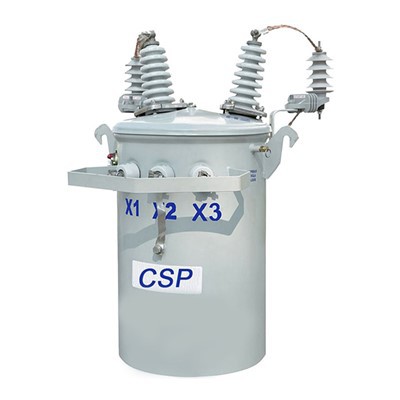
As a supplier of Structural Transformer technology, we are committed to providing high – quality solutions that leverage the power of this innovative approach. If you are interested in exploring how the Structural Transformer can benefit your business or research, we invite you to contact us for a procurement discussion. We look forward to working with you to unlock the potential of this cutting – edge technology.
References
Integrated Transformer Vaswani, A., Shazeer, N., Parmar, N., Uszkoreit, J., Jones, L., Gomez, A. N., … & Polosukhin, I. (2017). Attention is all you need. Advances in neural information processing systems, 30.
Nantong Yawei New Energy Technology Co., Ltd.
As one of the most professional structural transformer manufacturers and suppliers in China, we’re featured by quality products and good service. Please rest assured to wholesale durable structural transformer made in China here from our factory. Customized orders are welcome.
Address: Room 28-101, Building 27 and 28, No.333 Kaiyuan Avenue, Sunzhuang Subdistrict, Hai’an City, Nantong City, Jiangsu Province, China
E-mail: admin@nantongyawei.com
WebSite: https://www.nantongyawei.com/
