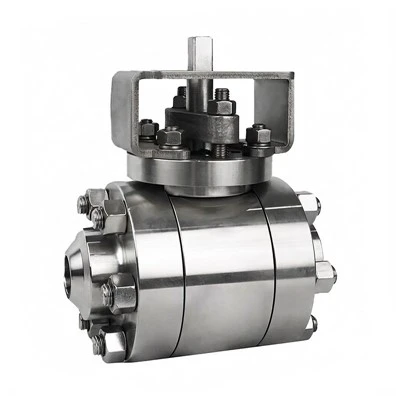
In the realm of industrial fluid control systems, the question of whether a ball valve can be used in a vacuum system is one that often arises. As a seasoned ball valve supplier, I’ve encountered numerous inquiries regarding the compatibility of ball valves with vacuum environments. In this blog post, I’ll delve into the technical aspects, advantages, limitations, and considerations when using ball valves in vacuum systems. Ball Valve
Understanding Vacuum Systems
Before we explore the suitability of ball valves in vacuum systems, it’s essential to understand the nature of vacuum environments. A vacuum is defined as a space devoid of matter, or more precisely, a space where the pressure is significantly lower than atmospheric pressure. Vacuum systems are widely used in various industries, including semiconductor manufacturing, pharmaceutical production, food processing, and scientific research.
The key characteristic of a vacuum system is the pressure differential between the inside and outside of the system. This pressure differential can cause unique challenges for valves, such as leakage, outgassing, and mechanical stress. Therefore, valves used in vacuum systems must be designed to withstand these conditions and maintain a reliable seal.
How Ball Valves Work
Ball valves are quarter – turn valves that use a spherical disc (the ball) with a hole in the middle to control the flow of fluid. When the valve is open, the hole in the ball aligns with the pipeline, allowing fluid to pass through. When the valve is closed, the ball is rotated 90 degrees, blocking the flow.
Ball valves are known for their simple design, quick operation, and tight shut – off capabilities. They are commonly used in a wide range of applications, including water treatment, oil and gas, and chemical processing. However, their performance in vacuum systems depends on several factors.
Advantages of Using Ball Valves in Vacuum Systems
1. Tight Shut – off
One of the primary advantages of ball valves in vacuum systems is their ability to provide a tight shut – off. The spherical design of the ball allows for a uniform seal against the valve seats, minimizing the risk of leakage. This is crucial in vacuum applications, where even a small amount of leakage can compromise the integrity of the vacuum and affect the process.
2. Quick Operation
Ball valves can be opened or closed with a quarter – turn of the handle, making them ideal for applications that require rapid flow control. In a vacuum system, quick operation can be essential for emergency shut – offs or for adjusting the vacuum level in a timely manner.
3. Durability
Ball valves are generally made of robust materials, such as stainless steel, brass, or PVC, which can withstand the mechanical stress and chemical corrosion associated with vacuum environments. This durability ensures a long service life and reduces the need for frequent maintenance.
4. Low Torque Requirement
Compared to other types of valves, such as gate valves or globe valves, ball valves typically have a low torque requirement for operation. This means that less force is needed to open or close the valve, which can be beneficial in automated vacuum systems where power consumption and actuator size are important considerations.
Limitations of Using Ball Valves in Vacuum Systems
1. Outgassing
Outgassing is the release of gas molecules from the surface of a material into a vacuum environment. Some materials used in ball valves, such as elastomeric seals, can outgas, which can contaminate the vacuum and affect the performance of the system. To minimize outgassing, special low – outgassing materials should be used for seals and other internal components.
2. Particle Generation
During the operation of a ball valve, there can be some friction between the ball and the valve seats, which may generate particles. In high – purity vacuum applications, such as semiconductor manufacturing, these particles can be a major concern as they can contaminate the process and cause defects in the final product.
3. Limited Pressure Range
While ball valves can be designed for various pressure ranges, they may have limitations in extremely high – vacuum applications. In very low – pressure environments, the differential pressure across the valve can be significant, which may cause the valve to deform or the seal to fail.
Considerations for Using Ball Valves in Vacuum Systems
1. Material Selection
The choice of materials for ball valves in vacuum systems is critical. The valve body, ball, and seats should be made of materials that are compatible with the vacuum environment and the process fluid. For example, stainless steel is a popular choice due to its corrosion resistance and low outgassing properties. The seals should be made of low – outgassing elastomers, such as Viton or Kalrez.
2. Valve Design
The design of the ball valve can also affect its performance in a vacuum system. For example, a full – port ball valve, where the hole in the ball is the same size as the pipeline, can minimize pressure drop and reduce the risk of particle accumulation. Additionally, the valve should be designed to prevent dead spaces where gas can be trapped.
3. Sealing Technology
Proper sealing is essential for ball valves in vacuum systems. Different sealing technologies, such as soft – seated or metal – seated, can be used depending on the application requirements. Soft – seated ball valves provide a better seal at lower pressures, while metal – seated ball valves are more suitable for high – temperature and high – pressure applications.
4. Testing and Certification
Before installing a ball valve in a vacuum system, it should be thoroughly tested to ensure its performance and reliability. The valve should be tested for leakage, outgassing, and particle generation. Additionally, it should meet relevant industry standards and certifications, such as ISO, ASME, or SEMI.
Real – World Applications
Ball valves are used in a variety of vacuum applications. In the semiconductor industry, ball valves are used to control the flow of gases in vacuum chambers during the manufacturing of microchips. In the food processing industry, they are used in vacuum packaging machines to control the evacuation of air from the packaging. In scientific research, ball valves are used in vacuum systems for experiments and analysis.
Conclusion
In conclusion, ball valves can be used in vacuum systems, but careful consideration must be given to their design, material selection, and sealing technology. When properly selected and installed, ball valves offer several advantages, including tight shut – off, quick operation, and durability. However, they also have some limitations, such as outgassing and particle generation, which need to be addressed.
Ball Valve As a ball valve supplier, I have the expertise and experience to provide high – quality ball valves that are suitable for vacuum applications. Our valves are designed and manufactured to meet the strictest industry standards and are thoroughly tested to ensure their performance and reliability. If you are in need of ball valves for your vacuum system, I encourage you to contact me for a detailed discussion about your requirements and to explore the best solutions for your application.
References
- ASME B16.34 – Valves – Flanged, Threaded, and Welding End
- ISO 15761 – Industrial valves – Ball valves
- SEMI Standards for Semiconductor Manufacturing Equipment
Zhejiang Chenxiang Valve Co., Ltd.
We are one of the most professional ball valve manufacturers and suppliers in China, also support customized service. We warmly welcome you to wholesale high quality ball valve in stock here from our factory. If you have any enquiry about quotation, please feel free to email us.
Address: No. 126 Zhongxing Road, Wenzhou Industrial Park, Longwan District, Wenzhou City, Zhejiang Province
E-mail: vip@chenxiangvalve.com
WebSite: https://www.cxindustrialvalve.com/
