Pneumatic actuators are essential components in various industrial applications, offering reliable and efficient motion control. As a supplier of pneumatic actuators, I’ve witnessed firsthand the importance of understanding how these devices work. In this blog post, I’ll delve into the inner workings of pneumatic actuators, exploring their components, operating principles, and applications. Pneumatic Actuator
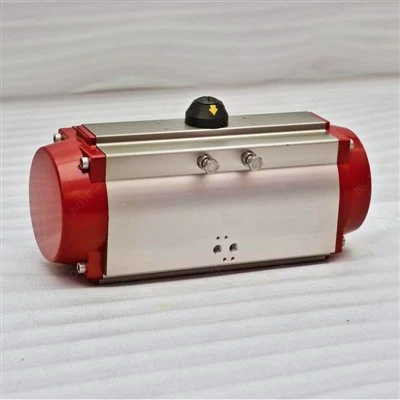
Components of a Pneumatic Actuator
Before we dive into how a pneumatic actuator works, it’s important to familiarize ourselves with its key components. A typical pneumatic actuator consists of the following parts:
- Cylinder: The cylinder is the main body of the actuator, housing the piston and providing a sealed chamber for the compressed air to act upon. Cylinders are typically made of materials such as aluminum, stainless steel, or brass, depending on the application requirements.
- Piston: The piston is a movable component that divides the cylinder into two chambers. When compressed air is introduced into one of the chambers, it creates a pressure differential that forces the piston to move in a linear motion.
- Piston Rod: The piston rod is attached to the piston and extends outside the cylinder. It is used to transfer the linear motion of the piston to the external load, such as a valve or a mechanical linkage.
- End Caps: The end caps are located at both ends of the cylinder and serve to seal the chamber and provide mounting points for the actuator. They also contain ports for the intake and exhaust of compressed air.
- Seals: Seals are used to prevent air leakage between the piston and the cylinder walls, as well as between the piston rod and the end caps. They are typically made of materials such as rubber or polyurethane, which provide a good balance of flexibility and durability.
- Valves: Valves are used to control the flow of compressed air into and out of the actuator. They can be either manually operated or automated, depending on the application requirements. Common types of valves used in pneumatic actuators include solenoid valves, spool valves, and poppet valves.
Operating Principles of a Pneumatic Actuator
The operation of a pneumatic actuator is based on the principle of converting the energy of compressed air into mechanical motion. Here’s a step-by-step breakdown of how a pneumatic actuator works:
- Compressed Air Supply: Compressed air is supplied to the actuator through a pneumatic system, which typically consists of an air compressor, a filter, a regulator, and a lubricator. The compressed air is stored in a reservoir or a pipeline until it is needed.
- Air Intake: When the actuator is commanded to move, a valve is opened to allow compressed air to enter one of the chambers of the cylinder. The compressed air exerts a force on the piston, causing it to move in a linear motion.
- Piston Movement: As the piston moves, it transfers its linear motion to the piston rod, which in turn moves the external load. The direction of the piston movement depends on which chamber of the cylinder is pressurized. If the compressed air is introduced into the chamber on the left side of the piston, the piston will move to the right. Conversely, if the compressed air is introduced into the chamber on the right side of the piston, the piston will move to the left.
- Air Exhaust: Once the piston has reached its desired position, the valve is closed to stop the flow of compressed air into the chamber. At the same time, another valve is opened to allow the compressed air in the other chamber to exhaust to the atmosphere. This creates a pressure differential that allows the piston to return to its original position.
- Return Stroke: During the return stroke, the compressed air in the chamber that was previously pressurized is exhausted, and the piston moves back to its original position under the force of a spring or the pressure of the compressed air in the other chamber.
Types of Pneumatic Actuators
There are several types of pneumatic actuators available on the market, each designed to meet specific application requirements. The most common types of pneumatic actuators include:
- Single-Acting Actuators: Single-acting actuators use compressed air to move the piston in one direction only. The return stroke is typically achieved by a spring or the force of gravity. Single-acting actuators are commonly used in applications where the load needs to be held in a fixed position or where a simple and cost-effective solution is required.
- Double-Acting Actuators: Double-acting actuators use compressed air to move the piston in both directions. Compressed air is supplied to both chambers of the cylinder, and the direction of the piston movement is controlled by the opening and closing of the valves. Double-acting actuators are more versatile than single-acting actuators and are commonly used in applications where precise control and high force output are required.
- Rotary Actuators: Rotary actuators are used to convert the linear motion of the piston into rotary motion. They are typically used in applications where a rotational movement is required, such as in valves, dampers, and robotic arms. Rotary actuators can be either single-acting or double-acting, depending on the application requirements.
Applications of Pneumatic Actuators
Pneumatic actuators are widely used in various industries due to their simplicity, reliability, and cost-effectiveness. Some of the common applications of pneumatic actuators include:
- Manufacturing: In the manufacturing industry, pneumatic actuators are used to control the movement of robots, conveyors, and automated machinery. They are also used in assembly lines to perform tasks such as picking, placing, and gripping.
- Automotive: In the automotive industry, pneumatic actuators are used in the braking system, the suspension system, and the engine control system. They are also used in the production of cars to control the movement of robotic arms and other automated equipment.
- Food and Beverage: In the food and beverage industry, pneumatic actuators are used in the packaging process to control the movement of bottles, cans, and other containers. They are also used in the processing of food and beverages to control the flow of liquids and gases.
- Pharmaceutical: In the pharmaceutical industry, pneumatic actuators are used in the production of drugs and medical devices. They are also used in the packaging process to control the movement of vials, syringes, and other medical containers.
- Oil and Gas: In the oil and gas industry, pneumatic actuators are used in the control of valves, dampers, and other equipment in pipelines and refineries. They are also used in the offshore drilling industry to control the movement of drilling equipment and other machinery.
Advantages of Using Pneumatic Actuators

There are several advantages to using pneumatic actuators in industrial applications, including:
- Simplicity: Pneumatic actuators are relatively simple in design and operation, making them easy to install, maintain, and repair. They also have fewer moving parts than other types of actuators, which reduces the risk of mechanical failure.
- Reliability: Pneumatic actuators are known for their reliability and durability. They can operate in harsh environments and under extreme conditions, making them suitable for a wide range of industrial applications.
- Cost-Effectiveness: Pneumatic actuators are generally more cost-effective than other types of actuators, such as electric or hydraulic actuators. They require less energy to operate and have lower maintenance costs, which makes them a popular choice for many industrial applications.
- Safety: Pneumatic actuators are considered to be safer than other types of actuators, as they do not use electricity or hydraulic fluid, which can pose a hazard in certain environments. They are also less likely to cause sparks or fires, which makes them suitable for use in explosive or flammable environments.
- Speed and Precision: Pneumatic actuators can provide high-speed and precise motion control, making them suitable for applications where fast and accurate movement is required. They can also be easily adjusted to provide different levels of force and speed, depending on the application requirements.
Conclusion
Pneumatic Rotary Actuator In conclusion, pneumatic actuators are essential components in various industrial applications, offering reliable and efficient motion control. By understanding how these devices work, their components, operating principles, and applications, you can make an informed decision when selecting a pneumatic actuator for your specific application. As a supplier of pneumatic actuators, I’m committed to providing high-quality products and excellent customer service. If you have any questions or need further information about our pneumatic actuators, please don’t hesitate to contact us. We look forward to working with you to meet your motion control needs.
References
- "Pneumatic Actuators: Principles, Types, and Applications." Industrial Automation Handbook.
- "Pneumatic Systems: Design, Installation, and Maintenance." Pneumatic Handbook.
- "Motion Control with Pneumatic Actuators." Mechatronics Journal.
Zhejiang Bigtork Valve Automation Co., Ltd.
Zhejiang Bigtork Valve Automation Co., Ltd. is one of the leading pneumatic actuator manufacturers and suppliers in China. We warmly welcome you to buy customized pneumatic actuator at competitive price from our factory. Contact us for more details.
Address: 98 Yuanqu Avenue,Anfeng Industrial Zone,Oubei,Yongjia,Zhejiang,China.
E-mail: sales@bigtork.com
WebSite: https://www.bigtork.com/
