If you spend enough time in the new energy battery testing space—either calibrating test chambers, troubleshooting hardware, or walking clients through ISO standards—you’ll hear this line at least once a month: “If we had a better flammability tester, we could get our product to market faster.” As someone who’s spent the last eight years selling and servicing these testers, I get the appeal. These machines are built to simulate real-world battery failure: overcharging, puncturing, thermal runaway, and the subsequent flammability that can take down a product or a brand overnight. They clamp a cell in a sealed chamber, pump in controlled oxygen, trigger a failure event, and track every metric—temperature, pressure, gas concentration, flame duration—like a meticulous lab technician. For a long time, I thought these testers were as close to a perfect solution as testing equipment gets. Then I started hearing the frustration from engineers at large automakers, small consumer electronics startups, and even research labs. That’s when I realized: no flammability tester is without gaps, and understanding those limitations isn’t just about selling a machine—it’s about helping clients use their testing tools better. Let’s break down the most common, impactful limitations I see every week, and why even the most expensive, top-of-line tester can fall short in the right (or wrong) scenario. New Energy Battery Flammability Tester
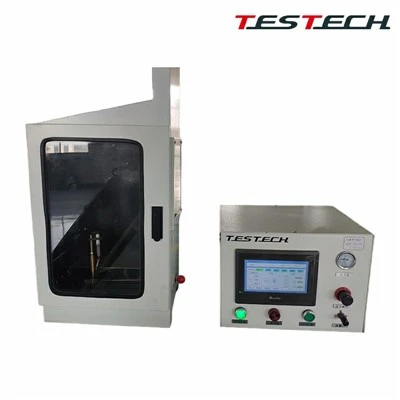
First, and one of the most underdiscussed limitations, is that most new energy battery flammability testers are built for standardized, single-cell tests—not real-world battery packs or modules. Let me explain. When the ISO 12405 standard (the main global guide for battery flammability testing) was written, it focused on individual cells for two reasons: cells are the basic building block, and testing packs was prohibitively expensive for most labs at the time. So testers are calibrated to hold one cell at a time, in a small chamber that’s sized for 18650, 21700, or small pouch cells. But modern products don’t run on single cells. A single electric vehicle module might have 12, 24, or even 48 cells wired together, stacked with cooling lines, bus bars, and adhesive that can change how thermal runaway propagates. If you test a single cell in a standard tester, you’ll get clear, consistent data. Test a module with 24 cells, and suddenly the chamber is too small to contain the gas flow between cells, or the heat from adjacent cells bleeds out faster than it would in a real pack, altering the flame duration or gas concentration. I had a client at a mid-sized EV startup last year who spent three months testing their module in a standard single-cell tester, only to realize the data they got didn’t match real-world pack tests they ran in their own lab. The problem? Their tester couldn’t handle the larger sample size without modifying its core hardware—modifications most suppliers won’t cover under warranty, because it’s not part of the original design. Even if you spring for a “large chamber” tester, many of these are just scaled-up versions of single-cell models. They don’t have the ability to replicate the physical layout of a real pack—so you’re still testing an idealized version of a product, not the one that will hit shelves.
Next up: sensor drift and calibration gaps that most clients don’t catch until it’s too late. Flammability testers rely on three core sensor types: thermocouples to track cell surface temperature, pressure transducers to measure the build-up of gas inside the chamber, and gas sensors to detect flammable fumes like hydrogen, methane, or ethane. Each of these sensors has a lifespan, and most cheap or mid-tier testers require calibration every three to six months—often at a third-party lab that’s not on-site. But even with regular calibration, sensor drift isn’t always obvious. A thermocouple that’s off by just 2 degrees Celsius might not trigger a red flag during a single-cell test, but when you’re tracking the threshold for thermal runaway (which for lithium-ion cells is around 150 degrees Celsius, give or take), that 2-degree gap can lead to false readings. I had a case last year with a medical device client who was testing small pouch cells for a portable defibrillator. Their tester’s oxygen sensor drifted by 3%—not a big number on paper, but it made the difference between labeling a cell as “flammable under normal use” and “safe for consumer use.” The client didn’t notice the drift for six months, until their regulatory audit flagged inconsistent test data. The worst part? Most flammability testers have no built-in warning system for subtle sensor drift. They’ll alert you if a pressure transducer is completely broken, but not if it’s just slightly off, skewing your gas concentration data. For clients relying on these tests for regulatory compliance—like meeting UN 38.3 for transport or IEC 62619 for industrial batteries—this isn’t just an inconvenience. It can delay a product launch by weeks or months.
Another big limitation is the inability to replicate real environmental conditions, especially extreme temperatures and humidity. A lot of flammability tests are run at room temperature, because it’s easy to standardize and replicate. But batteries don’t always operate in room temperature. Think about an EV parked in the Arizona desert in July, where battery temperatures can hit 60 degrees Celsius, or a consumer laptop used in a snowstorm, where temperatures drop below freezing. Most standard flammability testers don’t have temperature-controlled chambers that can replicate those extremes accurately. The few that do are custom-built and cost 2-3 times more than a standard model, which is out of reach for many small startups. Even with a temperature-controlled chamber, there’s the humidity variable. Lithium-ion battery flammability is heavily impacted by moisture: higher humidity can accelerate corrosion on terminals, leading to shorter circuits, while extremely low humidity can make battery materials more prone to thermal runaway. Most testers don’t have adjustable humidity controls, so you’re testing in a dry, neutral environment that has very little to do with the conditions a battery will actually face. I once worked with a solar panel battery manufacturer who tested their batteries in a standard tester at 25 degrees Celsius, got passing results, and then found that their batteries were failing in the field in coastal areas with high humidity. The tester couldn’t replicate that humidity, so the client’s test data didn’t reflect real-world performance.
Then there’s the issue of flame containment and secondary failure events that testers can’t account for. Flammability testers are designed to stop a test once the flame is extinguished, but real battery fires don’t work that way. When a battery catches fire, it can melt adjacent components, release toxic fumes, or even explode—events that don’t show up in a standard tester’s metrics. For example, a pouch cell test in a standard tester might have a 10-second flame, and the test ends there. But in a real scenario, that flame could melt the plastic casing of the battery pack, allowing flammable gas to leak out and ignite nearby wiring, leading to a much larger fire. Most testers don’t have sensors to track secondary fires, gas leakage, or toxic gas concentration—they only track the flame from the test cell itself. This is a huge gap for automotive clients, who care about how a battery fire will spread to the passenger compartment, and consumer electronics clients, who need to know if a laptop battery fire will ignite the screen or keyboard. Even the most advanced tester on the market today can’t fully replicate the interconnected nature of a real battery system, because it’s built to test individual cells, not full assemblies.
Let’s talk about operator skill and test variability, too—something that’s often overlooked when evaluating tester limitations. A flammability tester is only as good as the person running it. The exact way you puncture a cell (with a 3mm needle vs. a 5mm needle) can change the test outcome, as can the rate at which you overcharge a cell, or how you set the oxygen level in the chamber. Most testers come with a standard operating procedure (SOP) for common test events, but there’s still room for human error. I’ve seen two different operators run the exact same test on the same cell, using the same tester, and get different flame durations by 15%—all because one operator accelerated the test trigger event a little faster than the other. What’s worse, many low-cost testers don’t have built-in data logging that tracks every step of the test: when the puncture was triggered, at what speed, what the oxygen level was set to at every point. If a client is audited, they can’t prove that they ran the test exactly to SOP, because the tester doesn’t have a full audit trail. Even top-tier testers require operators to go through specialized training, which adds time and cost for labs that test a high volume of samples.
Now, I’m not saying all flammability testers are useless—far from it. These machines are critical for regulatory compliance, product development, and quality control, and they’ve saved countless clients from catastrophic product failures. But as someone who’s been on both sides: selling these machines, and troubleshooting them for clients, I can tell you that no tester is a one-size-fits-all solution. If you’re a small startup testing single cells for wearables, a standard mid-tier tester will probably meet your needs. If you’re an automaker testing large battery modules for electric vehicles, you need to be aware that your tester will have gaps in replicating real pack conditions. If you’re running regulatory tests, you need to budget for regular calibration and sensor maintenance, because even a small drift can derail your audit.
I’ve seen too many clients invest tens of thousands of dollars in a tester, only to find a year later that it can’t meet their evolving testing needs. The key is to be upfront about these limitations, not to pretend that your machine solves every problem. If you’re in the market for a new energy battery flammability tester, don’t just look at specs like chamber size or sensor count. Ask the supplier: Can this tester replicate full module or pack conditions? How often do sensors need calibration, and is on-site calibration available? Does it have adjustable temperature and humidity controls? Does it log every step of the test for audit purposes? If a supplier can’t answer these questions clearly, that’s a sign you need to keep looking.
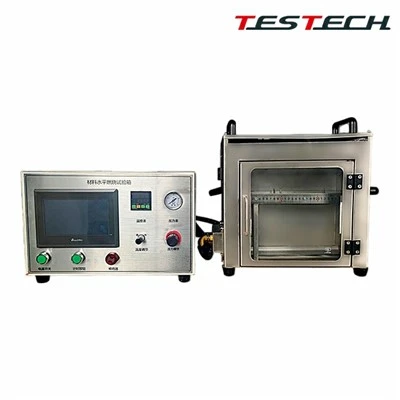
At the end of the day, the goal of flammability testing isn’t just to pass a standard—it’s to make sure that when a battery is put in a car, a laptop, or a solar storage system, it won’t catch fire when it’s exposed to real-world conditions. No tester can do that perfectly, but a good one will minimize the gaps, and a good supplier will help you work around the ones that remain. If you’re looking to discuss tester options, troubleshoot current equipment limitations, or tailor a testing solution to your specific battery type and use case, I’m here to help. Reach out to connect, and we can walk through your needs in detail.
Wire Cable Flammability Tester References:
ISO 12405-1:2011, Electrically propelled road vehicles – Test specification for lithium-ion traction battery packs and systems – Part 1: Life performance testing
IEC 62619:2017, Secondary lithium-ion cells for the propulsion of electric road vehicles – Safety requirements for batteries
UN 38.3:2021, Manual of Tests and Criteria, Part III, Sub-section 38.3, Tests on batteries transported by air
TESTech Instrument (Suzhou) Technologies
TESTech Instrument (Suzhou) Technologies is one of the most reliable new energy battery flammability tester manufacturers and suppliers in China. If you’re going to wholesale durable new energy battery flammability tester, welcome to get quotation from our factory. For price consultation, contact us.
Address: 8/F, R&D and Production Workshop No. 5, Jiangsu Guoqian Technology Innovation Industrial Park, 168 Lüliangshan Road, Huqiu District, Suzhou, Jiangsu Province, China
E-mail: sales@testech.com.cn
WebSite: https://www.testechfiretest.com/
